Showing posts with label Recipe. Show all posts

Thursday, 15 September 2011

Duck curry - Kerala Style

In India Chicken is about the only poultry you can lay your hands on without much scouting. Chicken is boring. I will go as far as saying that chicken should be downgraded to the status of a tubor. Managed to lay my hands on a duckling yesterday. Really. Only about 400 grams. The size of a partridge. And how happy it made me. I ate Braised Duck while I was in China last month. And would you believe it, I sat there thinking, as I stuffed my face with the worth-while foul, how it would taste curried. So I decided to find out with my little duckling.


This is a 'nadan' Kerala recipe. Nadan means local - if you are thinking of using the word to impress a Mallu, don't do it. You will never figure out how to pronounce it. It took me about 10 minutes just to get a Keralite to understand what I was saying. - It basically implies that it's a very simple one, nothing fancy. And it's true to the name. Though I want to shoot myself for describing it like this, it is like a very simple chicken curry. Barring the use of coconut oil. And nothing else will do! For that 'Nadan' taste it's got to be coconut oil. That's what the recipe said, and that is what I did.

Skin the duck and if your's is as small as mine - I am referring to the duck - cut it into four pieces. The neck into two. Coat in plenty of salt and turmeric and set aside.

In a kadhai fry one sliced onion and add some ginger, garlic and half a dozen peppercorns when brown. Three times as much ginger as garlic. In 5, add a paste of chili powder, coriander powder and garam masala. Some salt too. Once the paste is cooked whack in a sprig of curry leaves and the duck after rinsing and draining. Cook on medium till oil seperates and then simmer till tender. Add hot water as required. Season. Garnish with fried potatoes. Easy as. And you wouldn't believe the taste.

Wednesday, 27 July 2011

Pork tagine with bulgur

There isn't a culinary demographic that doesn't have it's own version of a stew. The Tagine is probably one of the most popular stews. With a fancy name of course. Come to think of it, naming food after the utensils used in their cooking or presentation is quite a common phenomenon. You have the Kadhai Chicken/Mutton in India, the Handi too, the Paella in Spain, you have a New York Pot Roast, very different from Roast Beef mind you. And, how could I forget, the very British Balti.

Stew was quite a favourite with I was a student - I don't like the sound of that for some reason. Stewing cuts were cheap - sounds like I lived through a war. And a large pot would last a couple of days. Haven't been stewing much lately. I have had an undercut of pork lying in the fridge for a couple of days and I was struggling a little with what to do with it. Pickling it did cross my mind. But in a moment of better judgement, a Tagine I decided. I do not own a tagine, so it's technically a pork saucepan. But we'll stick with Tagine.

Pork Tagine and Pepper and Tomato Bulgur 
So here goes. This recipe is adapted from about 3 different ones. I dusted 500 grams of pork undercut with a tablespoon of flour with a pinch of saffron and pepper. I think a fattier cut would have been better. Maybe shoulder.

I browned the meat in a couple of tablespoons of vegetable oil and set aside. In the same pan sweat
  • one onion
  • 3 tbsps ginger
  • 1 tbsp garlic

When the onions start to caramelize add
  • 1 tsp cumin
  • 1/2 tsp cinnamon powder
  • some paprika
  • some rasins
I returned the meat to the pan, added 2 cups of chicken stock and cooked on a low heat for about an hour and a half. Before adding the stock, I chucked in a quartered apple, which I removed and discarded after about 25-30 minutes. The apple lends it's sweetness to the dish and balances the paprika nicely. Works well in the absence of apricots. Goes without saying - season to taste.

I cooked the bulgur - dalia - with deseeded tomatoes, green peppers and saffron. a little pinch of turmeric to help on the yellow. Garnish the bulger with skinned, roasted almonds.

And voila, you might as well be in Morocco.


Sunday, 5 June 2011

Chicken Liver and Pork Terrine, Pickled Red Cabbage

Chicken Liver and Pork Terrine
It doesn't get much meatier than this really. Chicken livers and pork. And bacon. The pork, lean. Undercut of pig. Mince 1:1 of pork and chicken livers. Mince as you like. You can make it extra fine if you want. But I like it a little chunky. For that rustic feel. Season well. The iron from the livers can do with a good dose of salt to bring out the flavour. Whack in some:
  • chopped fresh parsley
  • ground ginger
  • cinnamon
And that's it. Mix well. No measures here. Be sensible. Put the meat putty in a bacon lined bread tin. Smoked bacon if you have. Oven, 170 degrees for about an hour and a half. Till the juices from the middle run clear. Or if you have a meat thermometer, 160 degrees in the centre. Turn the terrine out onto a plate and put in a fridge till cold. If you try to cut it while it's hot, its all going to break apart.


I pickled some red cabbage to go with this. Pickled in a mixture of white vinegar, apple cider vinegar, salt and sugar. Thought the sharpness would cut through the rich terrine quite well. And it did. Also some fig jam. Can't really go wrong with pork and a bit of sweet. Great for a brunch.

Saturday, 4 June 2011

Filet Mignon with Red Wine and Vanilla Sauce

Buffalo at it's best
Went and bought myself a 2 foot tenderloin the other day. Not beef. Buffalo. I have been eating buffalo quite a bit recently. Does well in the absence of beef. Though I am sure I could find some with a bit of effort. The best thing you could do to a tenderloin is to make yourself some Filet Mignons. Ideally, they are about an inch in diameter, so best use the tapered end of the loin.

I rolled a segment from the tapered end in some pepper and a bit of salt and let sit for a bit. To cook, I simply seared it in oil, with a dollop of butter and set in the oven at 200 degrees till rare.

The sauce is a good one. Got a nice sweetness. And that goes well with beef. I wanted to use juniper berries but don't get them around these parts.

In a pan, reduce to half:
  • a cup of red wine
  • the same of stock, beef preferably
  • with oregano
  • a tsp of vanilla
  • a tsp of tomato paste
  • salt and pepper to taste
  • some sugar, brown preferably
  • half an onion
  • 2 cloves of garlic, crushed
Once reduced, thicken with a roux.

Served with creamed mash and some beans for roughage. 25 quid on a plate?

Thursday, 19 May 2011

The real prawn curry


I first ate such a prawn curry at a friend's place a few years ago. Was cooked by a Marathi women. Was the best Gomantak-type prawn curry I have every had. The prawn curries I make don't come close. For starters, I just couldn't figure out where that red colour came from, and how the gravy, though definitely water based, tasted so coconutty. I used to use coconut milk in my prawn curries. Still do. But the whole dish gets too heavy. I have experimented with different chillies for the colour, but no success.

The last time I had gone to my fish-waali I asked her how she cooked prawn curry at home and happy I am that I asked. This is very like what I had been trying to replicate. No matter how much I had tried on my own I would have never figured it out. The secret to the red colour is a chili used by the Marathi and Gomantak community called Kumti. In fact my fish-waali even pointed me to the shop where she buys her spices from. The recipe is amazingly simple. I am pretty sure it would be quite nice with whatever chili you have at hand. But this Kumti business makes a ton of a difference. While she was rattling the recipe to me in great detail I asked her if I needed to put something sour in it. Gomantak food uses kokum. Or tamarind or a little vinegar maybe. Absolute no, she said. Not for prawns. For fish? Ya, could do.

So here's what I call Macchi Waali's Prawn Curry.  I managed to get hold of about a kilo of really juicy Tiger Prawns. For this recipe I would strongly recommend keeping the shells and heads on. Gives the curry a bisque-esqe touch. Just get rid of the front of the heads and the sand sack. With a paring knife slit the back, through the shells, to get rid of the vein. What would I do without my paring knife?


For the base paste (for about a kilo of prawns this size, or 2 kilos of normal ones):
  • 4 heaped tbsp Kumti chili powder. You get two types I am told. Spicy and not so spicy. Go with the not so spicy.
  • one clove of garlic
  • 2 inches of ginger
  • 4.5 tbsp coriander powder
  • 1 tsp turmeric
  • 1 tbsp garam masala
  • juice from a couple of limes
Grind it all with a bit of water if needed.


Also grind 150 gms of fried browned onions and 100 gms of fried brown dried coconut kernel.

In the same oil you fry the onions and coconut in, fry the paste. When the paste is cooked through, throw in the prawns and turn them around in the masala. Don't bash the crap out of them. Once coated, put in the ground mixture of onions and coconut. Stir about. Once coated again put in just enough hot water to cover the prawns. Season to taste. Let simmer till prawns cook through. Adjust water and salt, and you are done.


I think this best goes with an unpolished rice. It's got a wholer, more rustic taste.

Saturday, 16 April 2011

Fried masala fish - Mumbai Style

You get into the rut of working and before you know it, you've actually managed to survive, just barely, an entire working week eating just chlorophyll and gluten. But thanks to a little glad somewhere deep within the subconscious mind, before I go into cardiac arrest from food boredom, my being starts displaying unmissable symptoms. Day 2 brings on periodic bouts of dismay, followed by that "it's going to be okay soon" feeling. On day 3 the hopeful feeling is been replaced by an "it's the end of the world" sort of thing and the dismay gives way to an aggressive cynicism towards everything. Day 3 is a bad one. There is an anger. But not a destructive anger. It's a "I am so angry that I think a little cry might help" kind of anger. A pitiable state. Day 4 is hilarious. At least it seems that way now. You are going mad and you know it. Yet can't do anything about it. I start seeing life in butcher charts. It's incredibly bizarre. The drive home becomes a little hazardous, stray cows, a cause of distraction. I start playing this game in my head where I rate stray bovine, out of 10, on the basis of muscle distribution, rump cover, rib extension and carcass quality. I'll smile to myself when I think I've spotted a winner. An imaginary blue ribbon awarding ceremony follows. The crowd cheers. The winning specimen bows it's head in humility as a result of this massive honour bestowed upon it. All the other cows moo as the Chosen One is led away by men in hair nets and white aprons, all to the sound of a 12 inch blades making repeated swift contacts with steels. I know ... I told you it's mad! This is followed by a restless night and a feeling of certain doom in event that the sad state of affairs is not dealt with.

This Wednesday was day 4. I hadn't cooked fish in while and I went to buy just that after work. I bought this fish that I always see at the market, but never buy. It's local name is Bakra Macchi. Literally translating to Goat Fish. Goatfish is also a name given to a group of Mullet but I am not sure if that's where the name comes from. If you know your fish, out with it. Even more local names are very welcome.

A basic masala fish is quick, easy and delish. Most regular fish eating families in India would have their own versions. Coriander seeds, coconut, chili, turmeric, mustard seeds, ginger and garlic would feature in most them. Here's a version that I reverse engineered from what I ate in Mumbai over one home-cooked Sunday lunch. The masala used to marinade the fish would also make a decent base for a curry. Just cook it with some water and coconut milk and you have yourself a simple curry to throw some fish chunks or prawns into.

Any white sea fish would do for this. Scaled and gutted, leave the fish whole. Make the customary cuts both sides of the body.

Bakra Macchi
For the masala, whizz in a grinder:
  • roasted coriander seeds
  • roasted grated coconut
  • roasted mustard seeds
  • red chili power
  • turmeric
  • juice of one lime
  • ginger
  • garlic
  • a little bit of vinegar
  • salt
Coriander seeds will make the base for the paste so be a little generous. The coconut will take away some heat so don't be shy with the chili. Grind all the dry ingredients first and set aide. Then whizz the wet ones before mixing both together and give it all one last spin. Add water to get a spreadable consistency.

Seasoning a marinade can be tricky. Just remember - season boldly. The marinade has to compensate for the lack of salt in the fish. I read in one cookbook, don't remember which one now, that you can season your marinade about 7% more than what you think is normal to account for the meat. I think 8% works better.


Let the fish marinade for some time. Three quarters of an hour should do it. Before shallow frying in a pan coat the fish in semolina (rava). And there you have it.


Wednesday, 16 February 2011

Lessons in frying squid


Breaded Squid (some not) with Garlic and Saffron Mayonnaise
If you like seafood you probably love fried calamari. It's a beach holiday classic. Deep frying calamari sounds simple enough. It really isn't. Ask me. I've just had a less than perfect experience. I had a bag of frozen squid rings in the freezer which I was quite keen to dispatch. So straight from work, into the kitchen.

Now there are quite a few ways you could go about deep frying calamari. You could use a tempura style batter, with egg, iced water and flour, spices. You could bread the stuff. You could make a beer batter, just the way you would for battering fish. The beer, with all its bubbles makes the batter crispy and light. You could make a simple batter and replace the beer with a tad of baking soda. Hell, you could even use a dry batter. Simply a concoction of seasoned flours to toss the squid in before frying.

I remember seeing a recipe where the squid had been first dunked in the thick batter, then breaded before frying. Now, I am a sucker for extra crispy squid and this seemed like the way to go.

For the wet batter:
  1. Plain flour
  2. Maize flour. This was my addition. Thought the course grain would give a bit more of a bite. It is the yellow flour in the picture, if you were wondering quantities.
  3. Salt and pepper
  4. Some crushed paprika
  5. A little baking soda for some lift
  6. 2 cloves of crushed garlic

You can pretty much put whatever you want into your batter. Within reason of course. A bit of 5 spice would be great for that oriental flavour. Maybe even a bit of peanut or sesame oil. Add a little water to the dry mix and whisk to make a thickish batter. I think this is where I made my first mistake. My batter wasn't thick enough. But do as I say, not as I do. Too watery and the crumbs won't stick like they ought to.

On a plate spread out some breadcrumbs. Using stale bread is the best. You'll get nice, dry crumbs. Second mistake. I used fresh bread and put the crumbs in the oven to dry a bit. Not good enough. I had used dry crumbs when I had fried goat brains some time ago and I know how good it can be. A little tip - mix a bit of crushed up rusk with the bread crumbs. The crunch will reverberate in your cranium for a second or two.

Heat some oil in a heavy bottomed utensil. I used sunflower oil. Use anything that will not leave a smell. When the oil gets to 190'c - yes there is a right temperature too. I checked with my newly acquired meat thermometer if you should know - dip the squid in the wet batter, coat with the bread crumbs, and pop them into the oil. Keep one hand dry to handle the crumbs. Wet the crumbs and you'll have lumps the size of melons. Silly mistake number three.

Fry the squid for only a few moment and pull them out onto kitchen paper. Too much and you rather eat the sole of your shoe.

The mayonnaise was ready-made, with added crushed garlic and saffron. Works wonderfully.

Tuesday, 15 February 2011

Getting your greens down

Broccoli is effectively nothing but glorified cauliflower, but when you have tried to grow some of your own and failed, a successful harvest is nothing short of green gold. My broccoli this year was a resounding success. There was quite a lot of it. Some got distributed to friends and family, some got pureed and put in the freezer for soups, some got cooked and some got boiled until kingdom come and murdered! I have learnt that I have to get the broccoli in me or in the freezer as soon as I can as the stuff doesn't keep well at all in the Indian weather.


One of the lots
I got back from work the other day and thought this one up in the shower. I remember ordering a bowl of chili broccoli at a restaurant in London - I can't remember which one though - and getting a disappointing bowl of what seemed like Blue Dragon Sweet Chili Sauce drenched greens. So here's my attempt at doing my hard earned veg some justice.

I broke up one broccoli into flowerettes and sliced up the stems. I keep all of the stems. Its all good.


Chop up some garlic like you are French, some dried red chillies, and some lemon rind. Finely chop the lemon rind. Don't go by the picture otherwise you'll be brushing your tongue for a week.


In some extra virgin olive oil fry off the chillies and lemon rind followed by the garlic. Throw in the part steamed broccoli. I steam mine for only about 2 minutes. There's absolutely no point if you are going to cook the living daylights out of the damn thing till it turns a sickly fungus green.


Toss the broccoli around in the pan and trickle on a spoonful of honey. The honey gave it a nice glaze of sweetness and balanced the deep heat of the dried chillies quite well.


And there you have it. A bowl of Sweet Chili Broccoli that will be remembered for all the right reasons.

Watch this space to see what becomes of my Gujarat record breaking turnip.  


Wednesday, 2 February 2011

Thank you for smoking

The only agenda this Sunday was food. Food that roams free, frolics in the forest, food you need a keen eye and a keen shot to pot. Food that got away. Again. There is an old shikaari protocol of taking some potatoes on a shoot for times exactly like these. But we weren't too far away from the comforts of a fully loaded kitchen and frugality could be foregone.

There was some talk with a fellow cook about smoking fish a weekend ago and I had been itching to try my hand at that. Not exactly Scottish Smoked Salmon or a Mackerel Kipper, but the first attempt was most definitely worth the effort. Decided to go with a fatty sea fish. Fat's a great carrier of flavour, the best, and keeps the fish from drying out. Managed to lay my hands on 2, 1.5 kilo Groupers. Head removed, gutted, finned and scaled.

The one for the smoker was rubbed down with salt and garlic granules. I can't imagine smoked fish without buckets of salt and besides, it draws out the moisture and leaves you with a nice crunchy skin. Not exactly pork scratchings, but if you like piggy fat, you like fish fat. And trust you me, there is more fat in a nice sized grouper than you would imagine. The fish was left to lie over night.

Ready for the smoker
To hot smoke the fish we dug a pit in the ground, fired up some coal till they were white hot and laid on some water soaked logs. An assortment of logs. Some mango, others I didn't recognise. Next time I am tempted to use some packing wood, pine. I am told pine soaks up water and keeps flames at bay. The smoking pit was then covered with the top-slotted drum, courtesy of  a well-meaning oil company. They are just misunderstood. A little like Hitler. We did have trouble with flames here and the fat dripping off the fish did not help. The drum had to be lifted a few times to kill the fire. Who needs fingers anyway!


The fish was lowered into the drum for about an hour, head side down because that'll get a lot more heat. To be entirely honest with you. The fish was even a little grilled, having failed to keep the flames dead. But you live and you learn eh? Next time I am tempted to try a cold smoker where the smoke pit is further away from the smoking chamber. Might even pass the smoke through a pipe buried in the ground to cool the smoke before it reaches the meat. Then I could leave the fish to really pile on the flavour over a few hours, even a day.


Smoked Garlic Grouper
Cover the drum with a wet sack and watch the sinister contraption steam. I let the smoked fish cool before digging in. Will stay in the fridge for a few days and superb in sandwiches. I am already planning the next smoking. A ham maybe. Maybe even a humble chicken. Watch this space. 

One fish good. Two? Great. The second Grouper was barbecued. Masala style.

For the marinade:
  • Green chilies
  • Ginger
  • Garlic
  • Lime juice
  • Salt to taste
  • Turmeric
That's all I think. I did not marinade this one. I was in charge of the grilling. I charred the fish on both sides for a few minutes each and then popped it into the oven for about 10 minutes at 180 C. Again the fat made the barbecue flame like hell and after failed attempts of raising the grill modern technology was resorted to.


Whacking the fish in the oven made the skin go a little soggy. But on the plus side all the juices weren't lost. The fat drenched gravy would have gone great with some bread. I just drank mine!

Wednesday, 26 January 2011

Curry in a hurry

Here's a quick chicken curry for those days when you feel like cooking something that isn't overly complicated. I am not a big fan of the curry powders that come in little packets, but I have to admit that I have used them in the past. But no more! If you are medically fit to hold a knife - do not have Parkinson's - you can do this one with no bother whatsoever.

1)

Throw some curd onto 6 pieces of chicken. With bone preferably.

2)

In a little bit of water soak what you see. If you can't identify the contents and roughly count then please abort at this stage. Wash the chicken and put it back where it came from. Quitely.

3) 

Fry 2 small onions till they are brown and set aside.

4) 


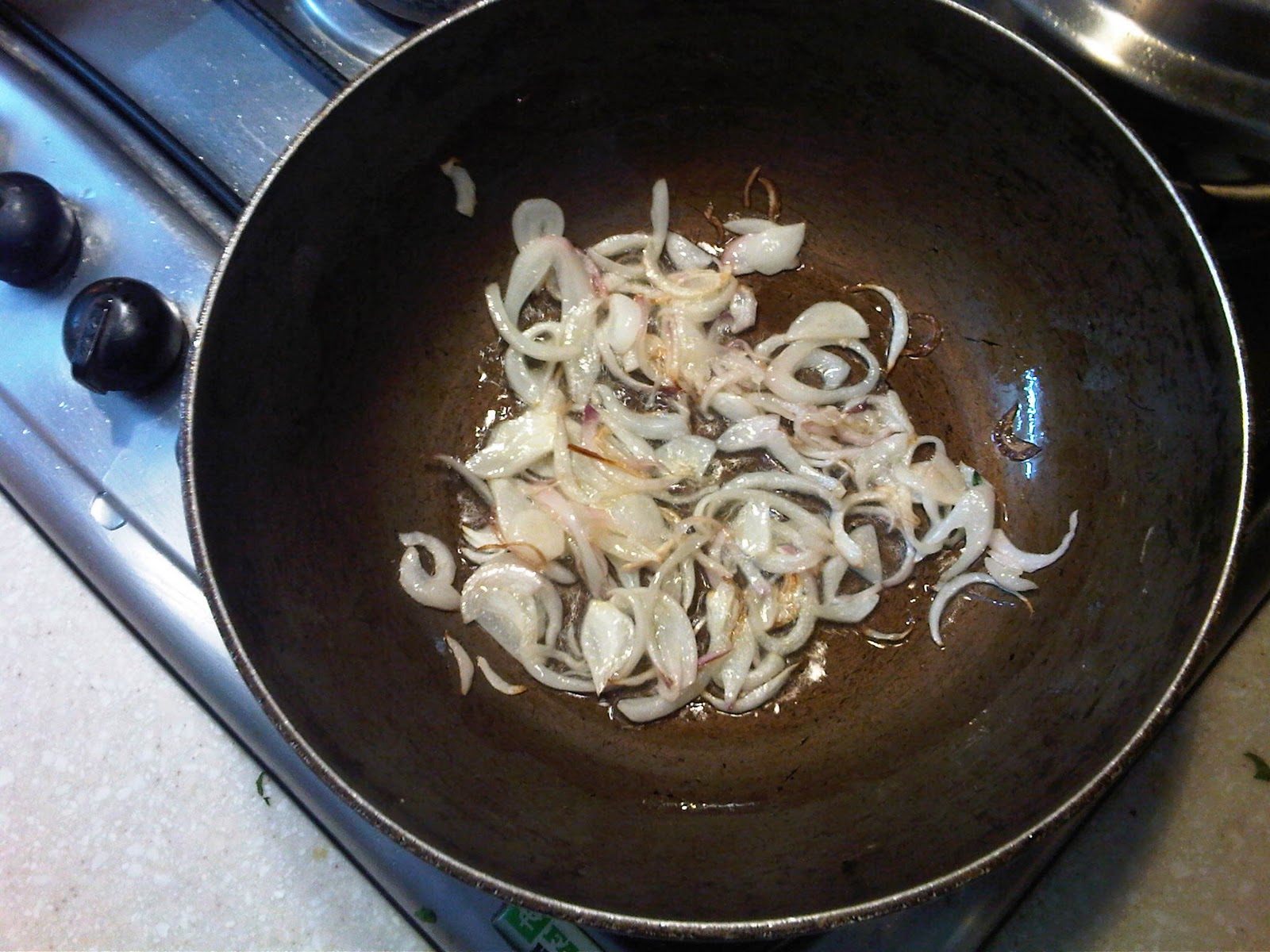
Fry another 3 small onions (very finely chopped) till golden brown and then add garlic and ginger paste. About 2 tablespoons of each. Cook for 5-6 minutes. Keep stirring.
5) 

Lay on the chicken. Leave the excess curd in the bowl. One and a little tablespoons of coriander powder, half a table spoon of turmeric and one table spoon of red chili powder. Heaped? Why not. I'd recommend going heavy handed on the spice. Put in the browned onions from step 1.

6)

Mix like your life depends on it.

7)

Put in the soaked spices with the water, turn the flame to medium and cover. If you have an electric hob, abort at this stage. Bin the contents of the pan and jump out the nearest window. Your life is worthless and no body loves you.

If you have a gas hob, stir occasionally. Put a little salt to get the water in the chicken on its way. Simmer for about 15 minutes.

8)

Add some warm water, the remaining curd and one decent sized tomato (chopped) and cover. Simmer till tender. adjust seasoning. A little fresh coriander goes a very long way.

9)

Eat left-overs cold, with white bread, for breakfast.


Tuesday, 4 January 2011

Roast Venison on Creamed Wild Mushrooms with Rosemary & Garlic Tatties and Snowpeas

I normally let the meat dictate what I cook. The sauce, condiments, even the presentation follows. At the Borough Market, in the vegetable section we spotted a mushroom stall that looked as welcoming as anything that doesn't bleed can possibly look. A sniff of the mushrooms and I was sold. I was having some even if only for a sauce. I recognised the Oysters (my grandmother used to grown some) and the Chanterelles. The other two I did find out about but my bird brain now fails me. So this dish started with half a brown paper bag-full of an assortment of these four types of fungi and then the search for the meat was on.


Considered fish, duck, even pigeon but finally settled on some venison. Wild venison if I might add (to make it all sound overly posh). Got the butcher to cut us a portion out of a rolled haunch. Had settled on Creamed Wild Mushrooms as the side and though game would go down a treat. Could have done some beef. There was some great looking Highland beef on the counter, but hadn't had venison in a while. Part Christmas indulgence too.

Preparing the venison to roast:-
The venison was rubbed down with some olive oil and pepper and then rolled around in a generous slug of red wine. Put with it a bay leaf and let sit for a bit. I refrained from putting any salt in at this stage should it draw moisture out of the meat while it stood.


For the Garlic and Rosemary Potatoes:-
Half some new potatoes and part boil them, leaving them just a little crunchy. To finish these heat some olive oil, with some butter for added richness and gleam.  Put into the pan some rosemary, fresh or dry, and some cloves of garlic, smashed but skin intact. The skin will prevent the garlic from burning crisp and imparting a bitter flavour to the potatoes. Without much further ado add the potatoes. Skin side down if I may recommend. I find that nicely browning the skin first will preserve the structural integrity of your tatties.


Cooking Bambi:-
Heat some oil in a baking tray, on the hob. Once smoking, seal off the rolled venison joint. As the meat hits the hot oil you'll get a lovely sweet smell from those sugars in the wine. Once sealed off nicely, pour into the tin  the rest  of the wine from the marinade. I like my meat rear, blue even, and I put the 380 gram joint into a oven at 220'c for about 17 minutes. Lay the cooked meat on a chopping board and cover with foil to rest for about 5.

For the Creamed Wild Mushrooms:-
DO NOT wash the mushrooms. If you don't have a mushroom brush then use a clean basting brush. Wash nice mushrooms in water and you lose some of the goodness. In a pan heat butter, introduce the mushrooms and add a pince of salt and pepper. Just as the mushrooms begin to soften add a few tablespoon fulls of double cream. Till the cream coats the shrooms. Taste and adjust seasoning. Do not cook the crap out of the mushrooms. A little texture goes a long way. Do all of this while the meat rests, should not take more than 4-5 minutes.


Oh yes, blanched some snowpeas to add a touch of green to the dish.

I did not want to drench the mushrooms in cream and the venison in cream sauce. I arranged nice chunky slices of venison on the Creamed Mushrooms, with only a very little drizzle of cream on the meat. Seasoned the meat once plated with coarse sea salt. The tatties and greens on the side.

Now I could go on about how everything worked so well, but I am not going to. But I will say this - it was all damn bloody good!

Roast Venison on Creamed Wild Mushrooms with Rosemary & Garlic Tatties and Snowpeas

Monday, 3 January 2011

Warm Salad of Stornoway Black Pudding, Stilton, Figs & Rocket


I find it incredibly difficult doing salads without any meat. I'll whack some into a perfectly good salad at times, and lots of it, as protest against all things non non-vegetarian. That wasn't the case this time round though. The centre piece of this one was the best black pudding in the land. Or so Stornoway black pudding is believed to be. The only other thing I could think of doing, at the time, with the black pudding I bought from Borough Market was to have it with a full English, and that seemed a little inappropriate. And I don't think Braveheart would have approved. So a warm salad it was going to be. If an ingredient has a reputation of being tops then some finesse is warranted.

I have seen some very unpleasant faces being made at the mention of black pudding. Almost as unpleasant as the thought of eating cooked pigs blood might be to the owners of those faces. I for one am a huge fan. I got introduced to it by a friend whilst I was living in Edinburgh and having lived there for almost half a decade I love the bloody thing! The texture and the spicy aroma is to die for. And I am sure Mr. Porky would have agreed if he was around to have a wee bite. The other thing black pudding has going for itself is that it ticks the 'waste not want not' box.

To the salad then. Not much to do. Decided to base the salad on some rocket. Thought the pepperiness  would work well with the sweetness of the figs and the salty richness of the unpasteurised Stilton. And it did. Figs and blue cheese is a time tested combination and the availability of some superb figs at the market were the inspiration. Must add here, the figs were a friend's idea, who was with me at the market too. A good cook and the daughter of a great cook.

Piled some rocket on the plate. Drizzled it with some extra virgin olive oil. Laid on the figs and crumbled onto everything the Stilton and fried Stornoway black pudding. And Bob's your uncle.

Tuesday, 7 December 2010

Coca-cola chicken

Yes, you heard right! A friend from the Guangdong province cooked this one evening and completely took me by surprise. Guangdong is where Cantonese food comes from, for those of you food geographers. And then come to think of it, coca-cola has got to be the perfect ingredient to get a sweet, sticky base. And balance that sweet with the salty of soy sauce and you are on to something!

This recipe works with any part of the chicken, and is superb with wings. Skin left on if you are not fussed about your weight. Wouldn't use breast meat myself, but do as you please.

For the sauce/syrup:
  • 3 tablespoons of coca-cola to one of soy sauce. I use light, but dark will do too.
  • sliced ginger
  • sliced garlic
  • sliced spring onions
  • sliced chillies
I added some dried red chillies for a deeper, smokier heat. And it gives me great pleasure to report that that was a winner.


Let the aromatics infuse and in the mean time fry off the chicken wings till cooked. I used olive oil. But I think that a little bit of added sesame oil would go down a treat adding that unmistakable woody, oriental fragrance.


Once the wings are cooked put in the syrup and stir occasionally till all the liquid has evaporated and the chicken is coated in a sticky goo. The goo is bloody awesome! Next time I'd leave it a little runny to eat with sticky rice. You just know it's going to be good. I served it with some home-grown, wilted, Pok Choi.